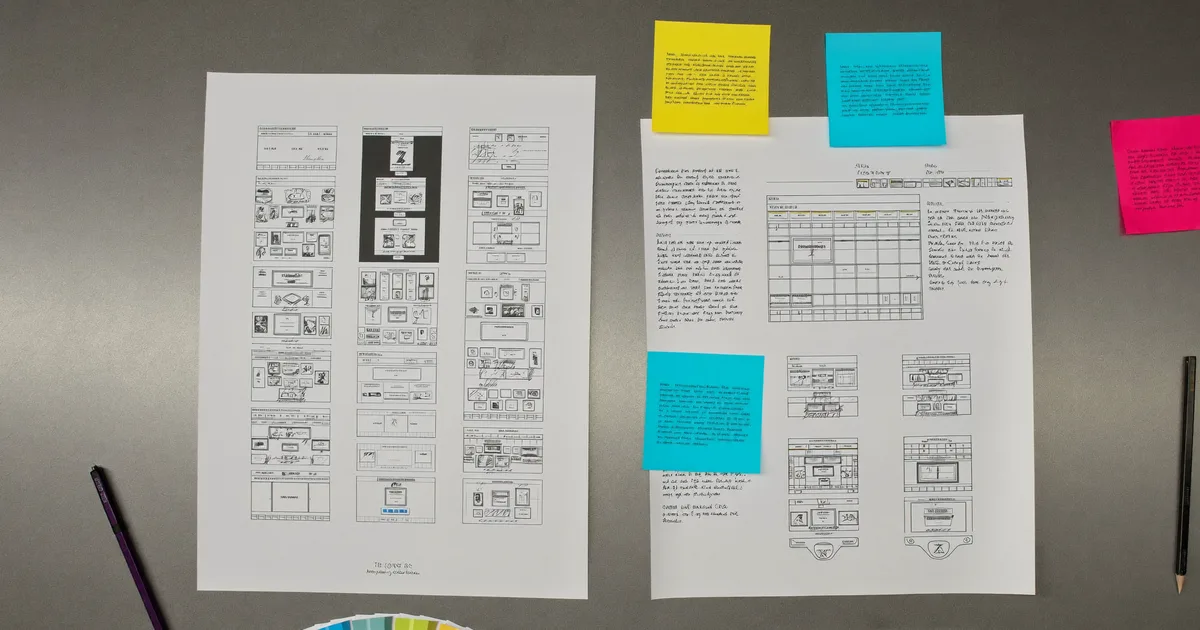
A website redesign costs roughly what a new website of the same scope costs: at 3R Core, $850 and up for a landing page, $1,200–$2,400 for a corporate site of five to eight sections, and $1,750 and up for an online store. Across the wider market, freelancers commonly charge $2,000–$8,000 for a custom small business site and full-service agencies $10,000–$35,000 and up. What moves your number is less the design than three things buyers forget to price: content, URL migration, and anything that has to connect to other software.
Below: prices by project type, when a lighter refresh is enough, the costs that hide inside a redesign, and how to change the site without losing the Google rankings you already have.
Web design & developmentReady for a website that brings you clients?
How much does a website redesign cost by project type?
Price a redesign by what the finished site has to do, not by how old the current one is. These are the bands we publish, next to what each one is for.
Project
3R Core price
Typical scope
Landing page redesign
from $850
One offer, one action. Often the page your ads send traffic to.
Corporate site redesign
$1,200–$2,400
5–8 sections: services, about, blog, contact. The usual small business site.
Online store redesign
from $1,750
Shopify or WooCommerce with catalog, payment gateway, inventory and admin panel.
Custom functionality
Quoted separately
Booking engines, member areas, integrations with software you already run.
Every one of those includes Figma design, responsive development, basic technical SEO, a contact form and Google Analytics, and the first year of domain, SSL and hosting. If you want a number for your own scope in two minutes, the website cost calculator gives you one without asking for an email first.
For context on the rest of the market, including DIY builders and freelancers, see how much a small business website costs. The same ranges apply to a rebuild, because most redesigns are rebuilds.
Is a redesign cheaper than building a new website?
Usually not by much. A full redesign replaces the design, the code and often the platform, which is the same work as a new build. What you save is the thinking you have already done: you know your customers, your best pages and what people ask before they buy.
It gets cheaper when you can reuse a lot: the copy still works, the photography is recent, and the platform stays the same. It gets more expensive than a new build when the old site has years of pages that rank on Google and all of them need to be mapped to new addresses.
Web design & development
Ready for a website that brings you clients?
Fast, SEO-ready websites built to convert. Get a no-commitment quote.
If the site converts but looks dated, a refresh is enough. If it does not convert, is slow on phones, or you cannot edit it without calling a developer, you need a redesign. The checklist below is the one we walk through on a first call.
Symptom
Refresh (new look, same structure)
Full redesign
Visitors arrive but few contact you
Yes: structure and message are the problem
Looks dated, leads are fine
Yes
Slow or broken on mobile
Yes: usually the theme or the code underneath
You cannot update text or prices yourself
Yes: move to a manageable platform
New services or a new audience
Sometimes, if it is a few pages
Yes, if the offer changed
You need a Spanish version
Yes: plan the bilingual structure from the start
A refresh keeps the page structure and changes typography, colors, images and a few layouts. It is faster and cheaper, and it does not touch URLs, which makes it low risk for SEO.
What makes a website redesign cost more?
Five things push a redesign quote up, and design is rarely one of them.
Number of unique page templates. Ten pages built from two templates cost less than five pages that each need their own layout.
Content. If the quote says "client provides content", someone still has to write it. New copy and photography are real line items.
URL migration. Every old page that ranks or gets links needs a 301 redirect to its new address. A site with a large blog multiplies this work.
Integrations. CRM, booking, inventory or accounting connections are engineering, and each should come with its own estimate.
A second language. A proper Spanish version is not a plugin toggle; it needs its own URLs, hreflang tags and adapted copy. We cover that in bilingual website design.
What hidden costs come with a redesign?
The costs that surprise people show up after launch: hosting from year two, paid plugins or apps, and traffic lost to a migration done without redirects. Put them in the budget before you sign.
Cost
When it appears
Reference
Hosting after year one
Month 13 onward
Roughly $10–$35 a month depending on traffic and platform
Premium plugins or Shopify apps
At launch and every year
Depends on the stack; ask for the list in the quote
Copywriting and photography
Before development
Often excluded from design quotes
Lost rankings
In the weeks after launch
Avoidable with a redirect map and a Search Console check
Ongoing SEO
After launch, optional
From $500 a month at 3R Core
How do you redesign a website without losing Google rankings?
Keep every URL that earns traffic, or redirect it with a 301 to the closest new page, and check Google Search Console for errors the week you launch. When a redesign loses rankings, the usual cause is old URLs returning 404 errors, not the new design.
Export what ranks today. From Search Console, list the pages with impressions over the last 12 months, and crawl the current site to get every URL.
Build a redirect map. One row per old URL with its new destination. Never send everything to the homepage.
Carry over titles and headings that already rank. Rewrite them only when you have a reason.
Keep the staging site out of Google with a noindex tag or a password, and remove that before launch.
Launch, then test the redirects by visiting a sample of old URLs.
Submit the new sitemap in Search Console and watch the page indexing report for two to four weeks.
We do this as part of every redesign we run under our web development service, because a new site that loses its traffic is not an upgrade.
How long does a website redesign take?
About as long as a new build of the same size, plus the time to map and test redirects. What delays projects is almost never development: it is waiting for content and for decisions. We break the weeks down in how long it takes to build a website.
What should a website redesign quote include?
A good quote names the deliverables, who writes the content, what happens to your current URLs, and what you will pay after launch. If any of those are missing, ask before you compare prices.
Number of pages and unique templates, and whether the design is custom or a configured theme.
Who writes and loads the content, and how many revision rounds are included.
A redirect map for existing pages, and who checks Search Console after launch.
Analytics and conversion tracking set up before launch.
Recurring costs from year two: hosting, domain, licenses.
That the domain, hosting and site are registered in your company's name.
Our published pricing lists what each band includes, so you can hold any quote, ours included, against it.
Frequently asked questions
How much does it cost to redesign a small business website?
At 3R Core, $1,200–$2,400 for a typical corporate site of five to eight sections, $850 and up for a landing page and $1,750 and up for an online store. In the wider market, freelancers commonly charge $2,000–$8,000 and full-service agencies $10,000–$35,000 and up for a small business build.
How often should a business redesign its website?
There is no fixed cycle. Redesign when the site stops converting, breaks on mobile, cannot be edited by your team, or no longer matches what you sell. A site that converts well can live for years with refreshes.
Will a redesign hurt my SEO?
Only if URLs change without 301 redirects or ranking content is removed. With a redirect map, the same titles on pages that already rank, and a Search Console check after launch, a redesign usually improves SEO because the new site is faster and cleaner.
Can I keep my current domain and hosting?
Yes, the domain always stays yours. Hosting can stay if it supports the new platform; if not, the new site moves to new hosting and the domain is pointed to it.
Is it cheaper to use a template?
A configured theme costs less than a custom design and is a legitimate choice for a simple site. The trade-off is that your site looks like others built on the same theme and is harder to adapt later.